


If you feel like a completely different person in the week or two before your period, you’re not alone.
Maybe you’re more tired, less patient, craving carbs, and desperate for everyone in your house to leave you alone for five minutes.
You’re also not alone if your body wants rest during your period and you’d rather stay home on your couch in sweats than go out for a date night.
But maybe your premenstrual symptoms go beyond a shorter fuse. Perhaps your period symptoms go beyond some fatigue.
We’re talking painful cramps, headaches or migraines, acne breakouts, insomnia, anxiety, brain fog, or mood changes like rage and overstimulation that make you question your entire life right before your period starts.
Sound familiar?
As a functional nutrition practitioner specializing in women’s health, I talk with women every day who are struggling with hormonal symptoms that pretty much rule their lives.
And while some changes in energy, appetite, mood, and motivation throughout your menstrual cycle are completely normal, you shouldn’t have to dread your period or spend half of every month feeling miserable.
So what’s actually going on? And what can you do if your PMS and period symptoms are interfering with your quality of life?
First, let’s talk about your cycle phases

Your menstrual cycle isn’t just about your period. It’s a dynamic process involving changing hormone levels, communication between your brain and reproductive system, and shifts in your body’s needs throughout the month.
The follicular phase is the first part of your cycle that starts when you begin bleeding and ends at ovulation, while the luteal phase begins after ovulation and ends when your next period starts.
During these phases, there are distinct and completely natural hormone shifts that happen— like estrogen fluctuations, progesterone rising after ovulation, and both hormones dropping just before your period comes. These hormonal changes are a normal part of the menstrual cycle, but they can influence how you feel physically and emotionally (even when in balance).
You might notice changes throughout your cycle, especially as you move from the follicular phase into the luteal phase:
- Energy: You may feel more energized, alert, and ready to take on the world during your follicular phase, then notice your energy dipping or your need for rest increasing after ovulation.
- Appetite and cravings: Your appetite may feel more manageable earlier in your cycle, while hunger ramps up and you’re suddenly thinking about carbs, snacks, and your next meal a whole lot more during your luteal phase.
- Mood: You might feel more upbeat, optimistic, or emotionally resilient during your follicular phase, then notice more irritability, sadness, or sensitivity to stress in the days leading up to your period.
- Motivation and focus: Maybe you’re full of ideas, feeling productive, and ready to tackle your to-do list during the follicular phase. Later in your cycle, you might have less mental bandwidth, find it harder to concentrate, or feel like even the smallest task requires a ridiculous amount of effort.
- Social battery: You may feel more outgoing and up for making plans earlier in your cycle, then crave more quiet, solitude, and fewer demands as your period approaches.
- Exercise and movement: You might feel more inclined to push yourself, try something new, or challenge your strength during the follicular phase, while gentler movement or extra recovery feels better later in your cycle.
- Sleep and recovery: You may notice changes in your sleep quality, how rested you feel in the morning, or how much downtime you need as your cycle progresses.
You may be able to tell when you’re in each phase without even checking your cycle-tracking app.
The truth is, we women shouldn’t expect to feel the same throughout every phase of our cycles. Our physiology changes, and it’s reasonable for our energy, appetite, and needs to change along with it.
But the fact that some cyclical changes are normal doesn’t mean every symptom you experience through your cycle is something you should have to tolerate. It doesn’t mean PMS symptoms or nightmare periods have to be your norm.
When hormonal symptoms go beyond the occasional bad day
There’s a difference between noticing some shifts in how you feel throughout your cycle and feeling like your body is working against you two or even three weeks of every month.
Maybe you experience painful cramps, diarrhea, and sadness one week. Headaches, anxiety, and brain fog the next. Or maybe you’re ready to quit your job, leave your spouse, change your name, sell all your possessions, and run away to a cabin in the woods right before you start bleeding.
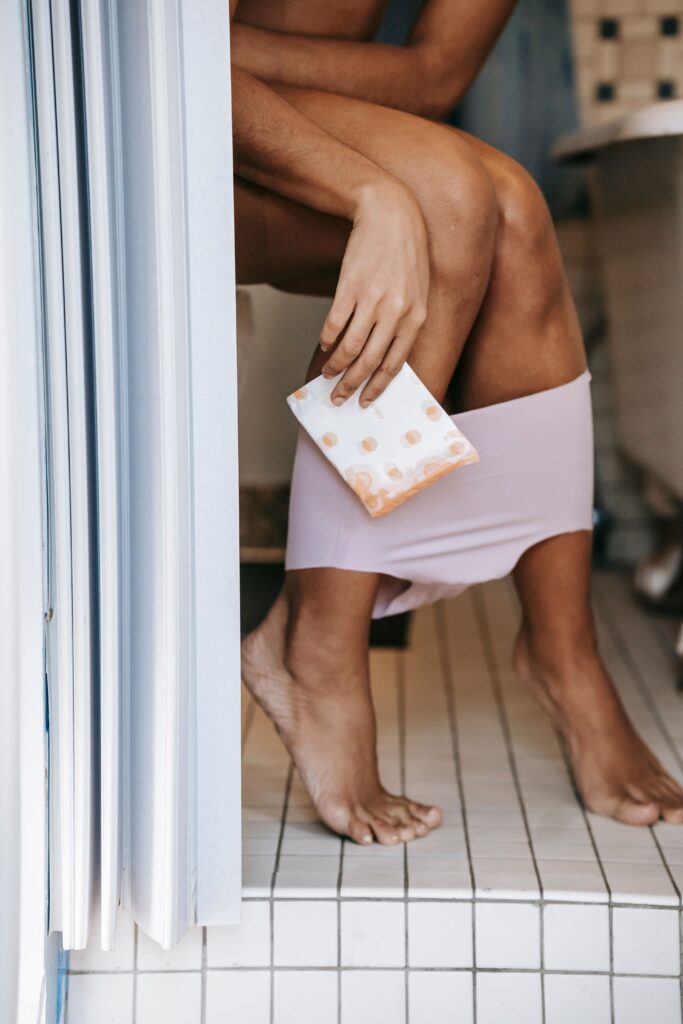
If your symptoms are consistently interfering with your relationships, work, sleep, or ability to function, it’s worth looking into them rather than chalking everything up to PMS, being a mom, or getting older.
Severe cyclical mood symptoms can sometimes be associated with premenstrual dysphoric disorder (PMDD), a condition that deserves proper assessment and care. Significant period pain, recurring migraines, or other disruptive symptoms also warrant medical evaluation.
No matter what, you don’t need to wait until you’re completely incapacitated to get support.
And you don’t need to accept feeling miserable for half or three-quarters of every month as the price of being a woman.
Your hormones aren’t the whole story
We’ve been taught to blame hormones for our symptoms when, in reality, they’re part of a much bigger picture and usually are just responding to signals they’re receiving.
Hormone production, metabolism, and effects involve a complex network of communication between the brain, ovaries, adrenal glands, and other tissues— and that’s influenced by factors like energy availability, blood sugar regulation, stress, gut health, inflammation, sleep, and more..
Of course, hormones do play a role in cyclical symptoms. But the picture isn’t always as simple as “estrogen dominance” or “low progesterone.”
Sometimes, hormone levels or their relationship to one another are relevant. Sometimes, symptoms are influenced by sensitivity to normal hormonal fluctuations. And sometimes, other health factors need to be considered.
Instead of asking, “How can I balance my hormones?,” it might be worth asking “Why might my hormones be out of balance in the first place?” instead.
Why looking beyond hormones matters
If you’re struggling with PMS, irregular cycles, painful periods, or other cyclical symptoms, it can be tempting to buy the latest supplement marketed for hormone balance or try the latest “hack” for better periods.
Seed cycling, cycle syncing, and supplements like DIM, maca, and berberine are often recommended in the context of hormone health. And while some interventions may help, there’s no one magic fix, and especially no one supplement that provides a universal solution.
Hormonal birth control is often recommended for managing symptoms, but it doesn’t necessarily address the root causes.
I prefer to look at the bigger picture.
1. Your food intake and nutrition
It’s helpful to understand how well-fueled and nourished your body is, especially on a regular basis, and how well your blood sugar is being regulated, which directly impacts hormones.
2. Your mineral patterns
Minerals are involved in many essential physiological processes, including energy production, nerve signaling, and muscle function, as well as hormone production and detoxification.
Assessing your mineral stores (which, in my practice, we do via HTMA or Hair Tissue Mineral Analysis) helps us understand how well-resourced your body is and provides insight into your metabolic and nervous system capacity.
3. Your digestion and gut health
Digestion affects how your body breaks down food, absorbs nutrients, and eliminates waste— including excess hormones. Although they don’t seem to be connected, gut health can impact hormones in many ways.
4. Your menstrual cycle patterns
Your cycles can provide useful information about your hormones, especially when you pay attention to patterns over time. Tracking your cycle length, bleeding, any symptoms, and changes from month to month can help you notice trends.
Basal body temperature tracking can offer additional clues about if and when you’re ovulating when done properly, too.
5. Your hormones
Sometimes, direct hormone testing is appropriate. Other times, your symptoms and medical history may point toward different investigations.
The right approach depends on your individual circumstances. Hormone testing isn’t always necessary, and the timing and type of testing matter when it is.
The goal isn’t to test everything under the sun. It’s to ask better questions, use the information available, and figure out what makes sense for you.
How I help women take a more personalized approach to hormone health
This is the work I do with my clients inside Rooted & Restored, my six-month, one-on-one functional nutrition program.
We start by assessing your nutrition and testing your mineral patterns to better understand your foundational needs and identify areas that may deserve more attention.
From there, we consider your symptoms, health history, menstrual cycle patterns, and any existing lab work to determine whether additional testing or other areas of investigation make sense.
Then we use all those pieces to build a personalized plan that supports your body, adapts as your needs change, and evolves as we work together over six months— instead of throwing another generic “hormone-balancing” protocol at you and saying, “Good luck!”
Because figuring out what’s contributing to your symptoms is one thing. Putting a plan into practice to address those root causes, continuing to monitor how your body responds, and making the appropriate adjustments along the way is another.
This approach has helped hundreds of women, like my client Britty, who came to me struggling with low libido, overwhelming irritability and rage during her luteal phase, and difficulty falling asleep that could take three hours.
After only a few months of working together, her libido returned, her moods felt more stable, she noticed handling stress without spiraling, and she began falling asleep in less than an hour on average.
Every woman’s experience is different, and results aren’t guaranteed. But her experience is a good example of why I believe in looking at the individual rather than handing everyone the same protocol.
You deserve to feel better than “it’s just PMS”
Your menstrual cycle can change how you feel throughout the month. But if your symptoms are taking over your life, you deserve to have them taken seriously.
Feeling better doesn’t require chasing every hormone-balancing trend, testing every possible hormone, or driving yourself crazy.
It starts by getting curious about your symptoms, looking for patterns, and getting the right support to help you figure out what to investigate and what changes to make.
And you definitely don’t have to figure it all out alone. (I know, this stuff can get confusing and overwhelming real fast!)
Ready to take a closer look at your health?
If you’re seeking personalized, holistic and root-cause-focused support to better understand your symptoms and put all the pieces together, apply to work with me.
Once you submit an application, I’ll be in touch with next steps and we can set a time to chat through your specific challenges and goals, and how I can help.


